Designing modern office spaces in business hubs like London or Manchester increasingly involves moving away from rigid, angular geometries in favour of organic forms. The challenge arises when an architect’s vision meets the reality of installation systems that aren’t designed to cooperate with curves. Most standard aluminium profiles are rigid constructions meant for straight lines. At Ace Partitioning Systems, we take a different approach—we know that forcing a curve onto a profile not designed for it leads to a disastrous finish, both aesthetically and acoustically.
Precision Bending and Deflection Channel Functionality
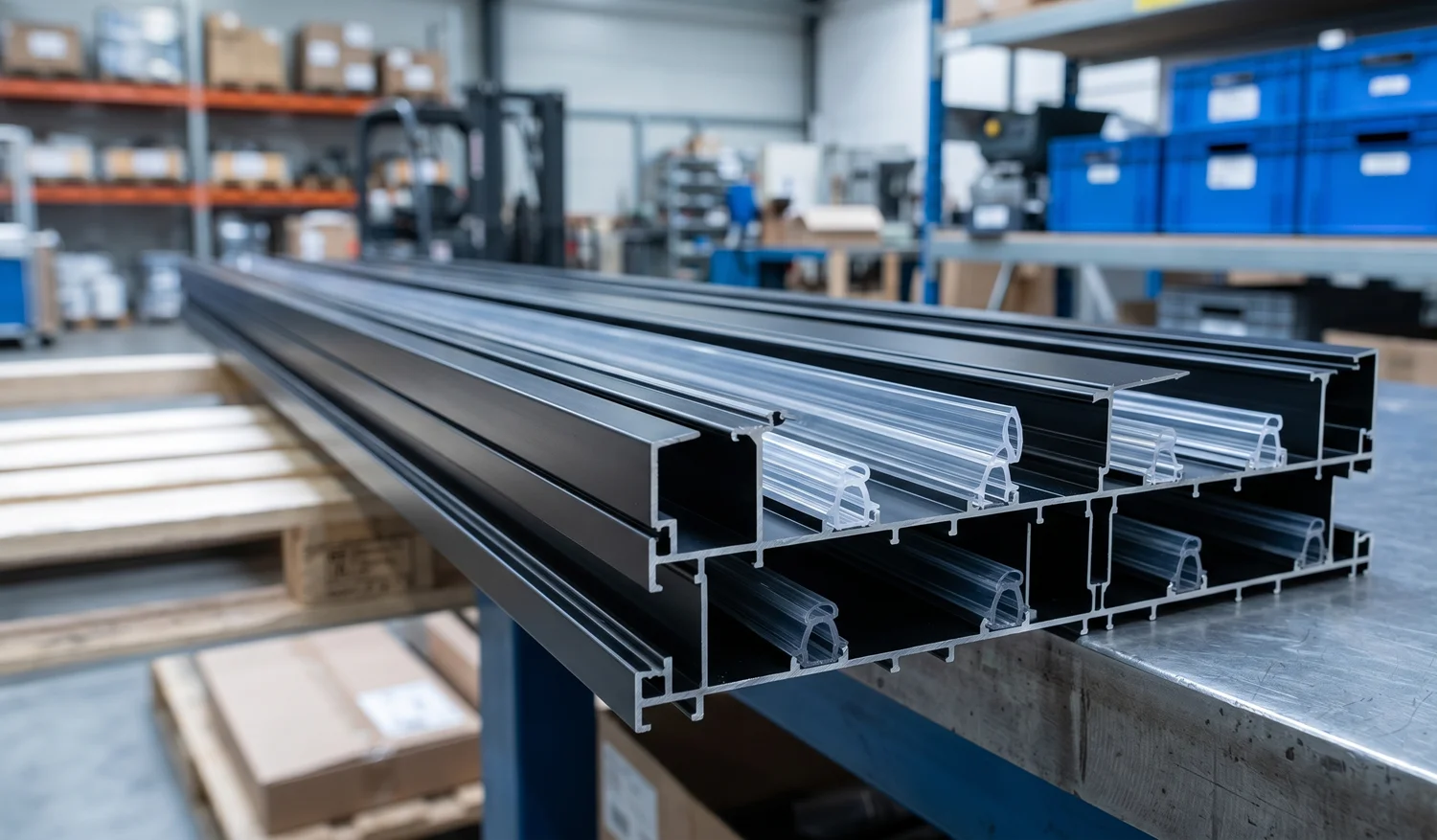
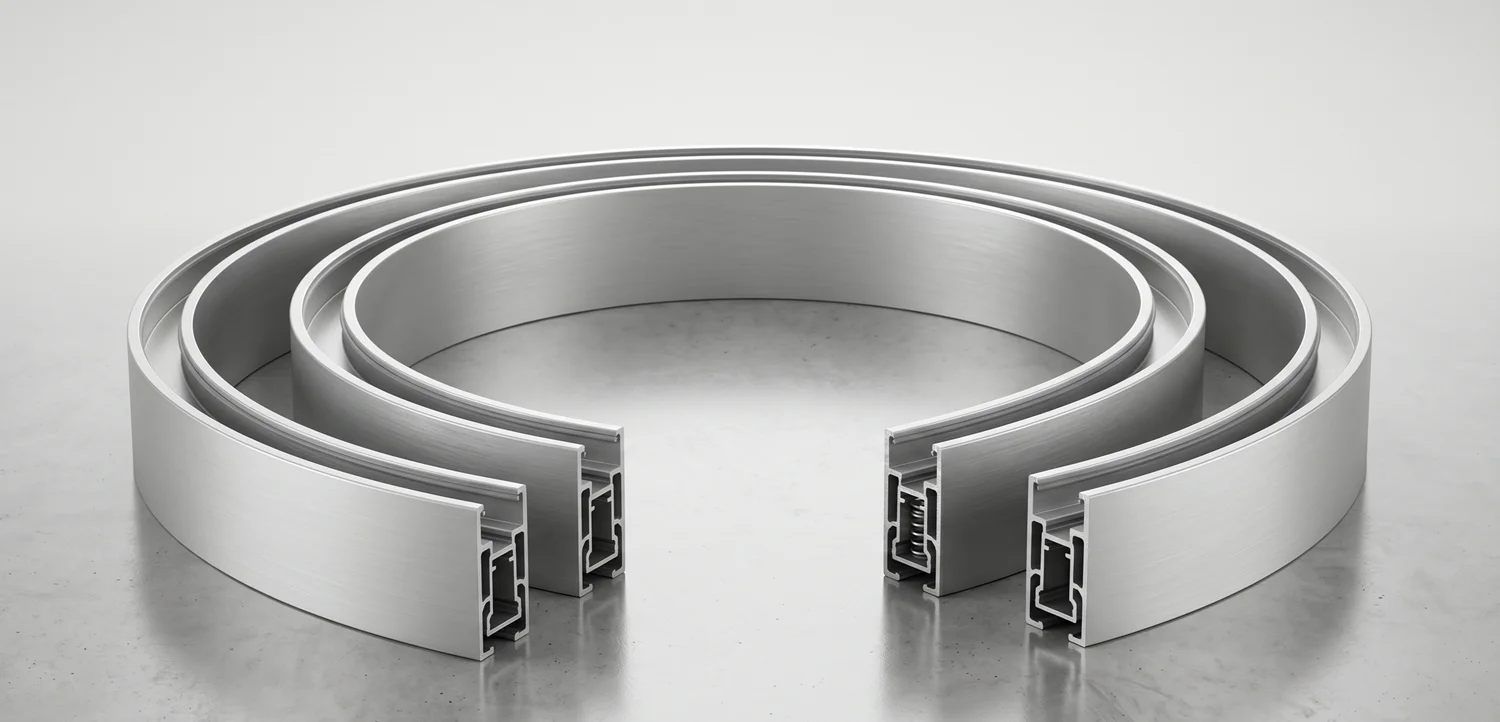
The most critical, yet demanding, element in installing curved glass walls is not the main frame itself, but the two-part deflection channel. Given the nature of British construction, where building movement is expected and mandated by technical standards, the system must work in harmony with the building’s structure. Precision-bending a deflection channel so that both parts interact perfectly while maintaining vertical movement requires specialist technical knowledge.
Using professional, dedicated solutions eliminates the errors we still frequently see on-site—specifically, attempts to fit straight profiles to curved glass by “snapping” or notching them. Such practices not only ruin the visual effect but also completely disqualify the partition in terms of acoustic certification. Ace Partitioning systems are machine-bent to a specific radius, ensuring that every structural line follows the edge of the glass perfectly, without any compromise on quality.
Acoustics in Curved Environments
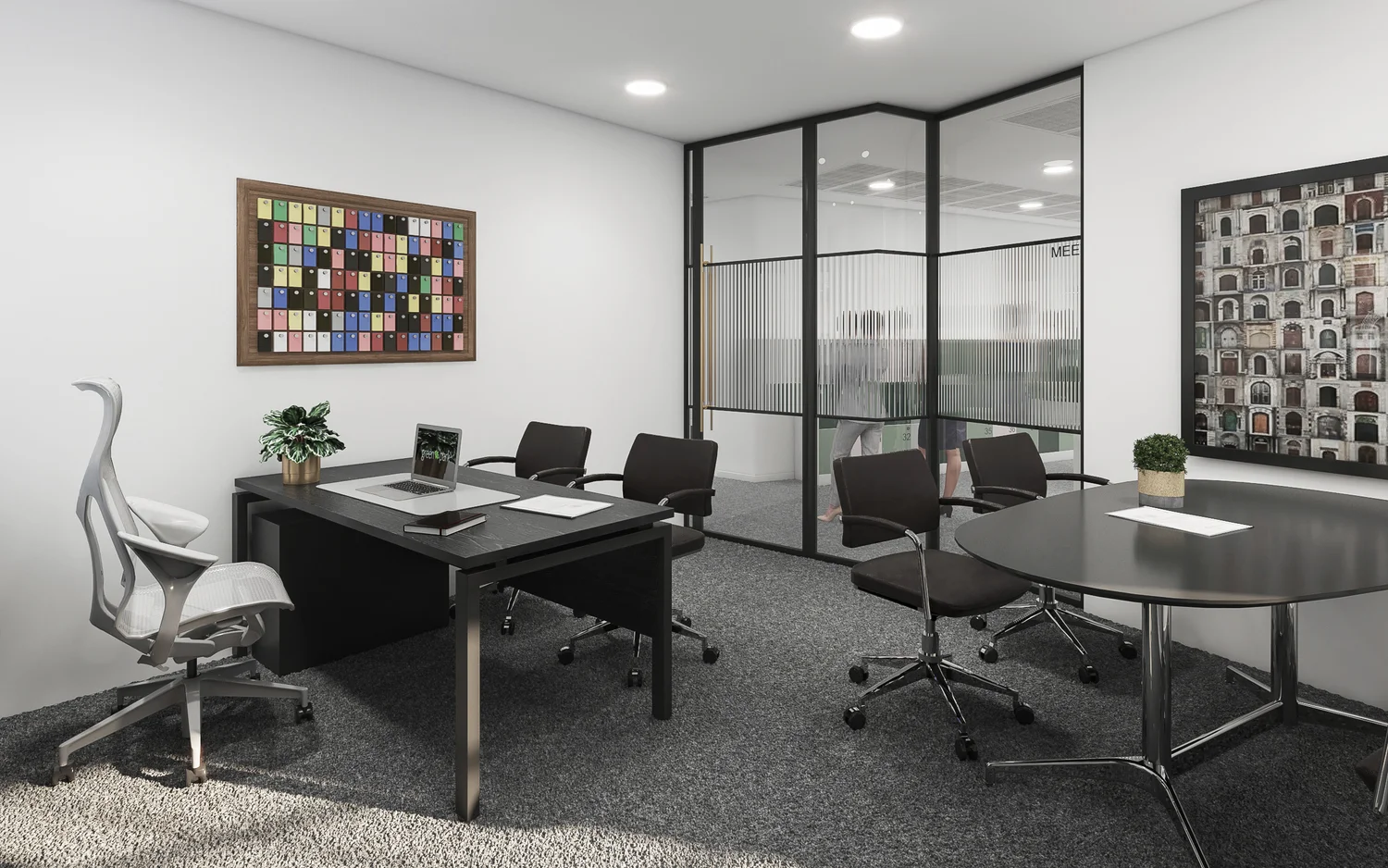
A common question we encounter is whether double-glazed systems maintain their insulation properties when curved. Experience confirms this is only possible if a constant, unwavering air gap is maintained between the glass panes throughout the entire radius. Our 54mm system achieves excellent soundproofing parameters, which is essential for boardrooms or executive offices where speech privacy is a non-negotiable priority.
Furthermore, curved walls naturally handle sound dispersion within a room better than flat glass surfaces. Flat panes often reflect sound waves directly, which can create a distracting echo. By choosing our curved systems, you are investing not just in unique design, but in a superior acoustic environment that aligns with modern workplace design standards.
Technical Challenges and Determining the Bend Radius
When planning curved glass projects, early technical consultation is an absolute necessity. Despite its versatility, aluminium has specific physical limits. A radius that is too tight can lead to material stress or unsightly distortions on the profile surface. As a supplier with extensive market experience, we always recommend verifying the radius specifications before the glass order is finalised.
A correctly selected system provides the structural stability that cheaper, thin-walled alternatives lack. The sleekness of the profile remains intact after bending, resulting in a lightweight, seamless, and high-end finish. If your project involves curved challenges, it is worth opting for proven solutions that will withstand years of intensive use. Have you considered how the choice of radius will impact your final installation schedule? It is often a neglected detail that determines the overall success of the investment.